Swing Clamps with sturdy Swing Mechanism
double-acting, max. operating pressure 350 bar

double-acting, max. operating pressure 350 bar
Advantages
- 4 sizes available
- Compact design
- High clamping force at low operating pressure
- Sturdy swing mechanism
- Not affected by high flow rates
- Indexing of the clamping arm in specified position
- Special swivel angles easy to achieve
- Metal-protected wiper, standard
- Optional position control for flanged versions
- Mounting position: any
- The bottom flange and top flange configurations can be equipped with throttle valves
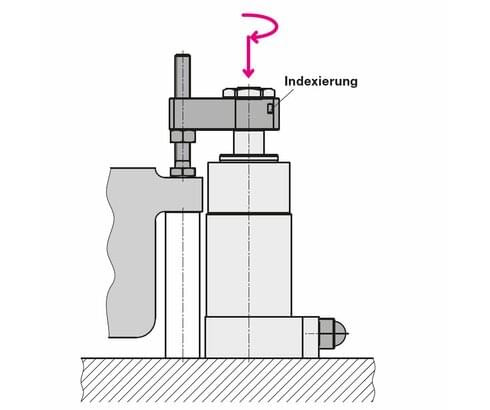
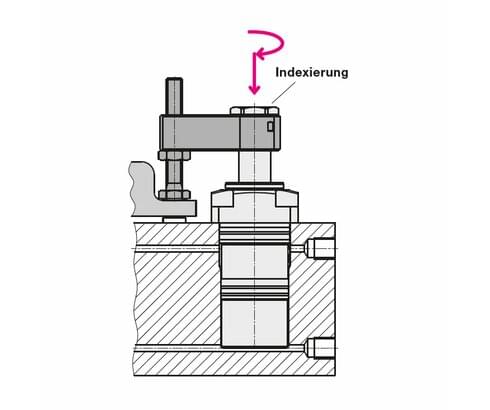
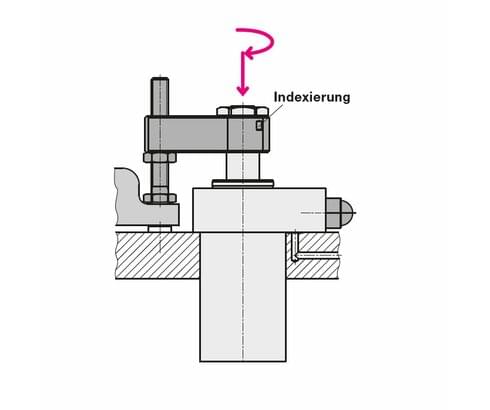
Application
Hydraulic swing clamps are used for clamping workpieces when it is essential to keep
the clamping points free for unrestricted fixture loading and unloading.
Due to the sturdy swing mechanism these swing clamps are particularly suited for:
• Automatic manufacturing systems
• Clamping fixtures with workpiece loading via handling systems
• Transfer lines
• Test systems for motors, gears and axes
• Assembly lines
• Special machine tools
Description
The hydraulic swing clamp is a pull-type cylinder where a part of the total stroke is used to swing the piston. The favourable area ratio (piston/piston rod) enables high clamping forces even at relatively low oil pressures.
For high flow rates the swing speed is limited by an orifice in the clamping port. This also enables uniform clamping of several swivel clamps when oil is supplied via a common bore hole. Due to the sturdy swing mechanism the angle position of the clamping arm remains the same after a minor collision with the workpiece during loading or unloading. Even a collision during the clamping process is not critical.
Take advantage of the free benefits of our login area:
- CAD data download
- Download operating instructions
Welcome back! Log in to your already existing user account.